
Insights · EV battery reports
What a battery diagnostic record proves
A scan report and a capacity test answer two different questions. When a seller sends a diagnostic sheet instead of a state-of-health figure, it is worth knowing which of the two you are holding.
A diagnostic record is a by-product of service work. Somebody plugged a scan tool into the car, read what the battery management system had stored, and printed or exported the result. That record can be genuinely useful, and it can also be much weaker than it looks. Which one it is depends on what the tool was asked to do and what the car was doing at the time.
A scan and a capacity test are not the same thing
Fault codes come from the battery management system. They report conditions the system noticed: a sensor reading outside its expected range, a module that behaved unexpectedly, a contactor that did not open when told to. Reading codes takes minutes and needs nothing from the car except a working low-voltage supply.
A capacity test is a measurement. It takes longer, it usually needs the pack at a particular charge level, and it produces a number that only means something alongside the conditions it was taken under. A scan report cannot stand in for it. If the sheet in front of you has codes on it and no measurement, you have a service history, not a battery assessment.
Fields that decide how much weight it carries
When a supplier sends a diagnostic sheet, these are the fields that decide how much weight it can carry:
- Which tool produced it, and at what software version. An older release can miss codes a newer one reads.
- The date of the scan and the odometer reading at that moment.
- The vehicle or stock reference, so the record is tied to one car and not to a batch.
- Whether each code was current or stored. A stored code is history; a current one is a condition that was present when the tool was connected.
- Whether any codes were cleared, and whether the car was run again afterwards.
- Any follow-up the record itself calls for, such as a longer measurement or a repeat check.
That last pair matters more than the rest. Clearing codes resets the warning lights and empties the stored list. A sheet printed after a clear looks clean because the evidence was removed, not because the condition was fixed. If a record shows a clear, ask what happened next.
A clean scan is evidence about one moment
An empty fault-code list at one moment is evidence about that moment. It is not a measurement of remaining capacity, and it says nothing about cell balance across the pack. A pack can hold an uneven spread of cell voltages and still report nothing to the scan tool until the spread grows.
It is also not a prediction. Nothing in a scan report tells you how the pack will behave in two years, in a hot climate, or on a charging routine nobody has described to you yet.
Why the conditions matter, in the manufacturers’ own words
Two public documents show how tightly a battery check is tied to the state the car was in. The first is a Stellantis recall notice published by NHTSA for a plug-in hybrid battery. Its battery integrity procedure opens with a condition on the car itself: the high-voltage battery must be between 50% and 80% charge before the procedure begins. The same document requires a particular scan tool at its latest software release, a Level 2 charger during the procedure, and a pack temperature above minus 7 degrees Celsius before the diagnostic will run at all.
The second is a Volkswagen technical service bulletin for the e-Golf and ID.4, also hosted by NHTSA. It lists three different test plans for determining remaining capacity, with different outputs and measuring tolerances, and it states that the bulletin does not apply when relevant fault codes are present in the battery management module. In that case the car goes to fault finding first, and the capacity question waits.
Read together, they say something simple about any diagnostic sheet: the result belongs to the conditions it was taken under. A number or a clean list without those conditions is harder to use, not easier.
Questions worth putting to the supplier
- Was the battery charged to a stated level before the test, and what level?
- Was the car at normal operating temperature, and roughly what was the ambient temperature?
- Were codes read before and after any work, and is both readings in the record?
- Did the tool recommend a longer measurement, and was it carried out?
- Is there a capacity or state-of-health figure from a separate test, with its own date?
None of these questions require the supplier to have run a test they cannot run. They only require the paperwork to say what was done. Where a document does not exist, the honest answer is that it does not exist, and that answer is more useful than a clean-looking sheet with no method behind it.
Our part, and the line we do not cross
Vehicle pages on this site carry the facts the supplying dealer publishes, transcribed with their source and date. Battery documents are not part of that listing data, so they are asked for per vehicle and passed on as they arrive, with whatever conditions the record itself states. We do not run battery tests, and nothing here should be read as an assessment of a particular car.
For the wider question of how to compare two battery reports against each other, see our checklist for reading a battery health report. If you are at the stage of moving money, the four things that should match on paper first are set out in the deposit guide. To ask what documents exist for a specific vehicle, send the vehicle and destination in a sourcing request.
Where the sources are
- Recall 23V-787, battery integrity procedure — Stellantis, hosted by NHTSA. The charge window, tool, charger and temperature requirements are stated in its procedure section. Accessed 27 September 2026.
- 93-23-08: Determination of HV-Battery Health, Remaining Capacity — Volkswagen technical service bulletin hosted by NHTSA. Applies only to the model years listed in the bulletin. Accessed 27 September 2026.
- High-voltage battery diagnosis: two options for workshops — Hella Gutmann. A workshop-equipment maker describing how battery testing is approached in a garage. Accessed 27 September 2026.
- Early signs of cell imbalance in high-voltage EV batteries — Midtronics. On why an uneven pack can stay quiet for a long time. Accessed 27 September 2026.
Where to go next
- Compare two battery reports on equal terms — what a report should state before you trust a figure.
- Send a sourcing request with the vehicle and destination — you can list the battery documents you want asked about.
Vehicles in stock right now
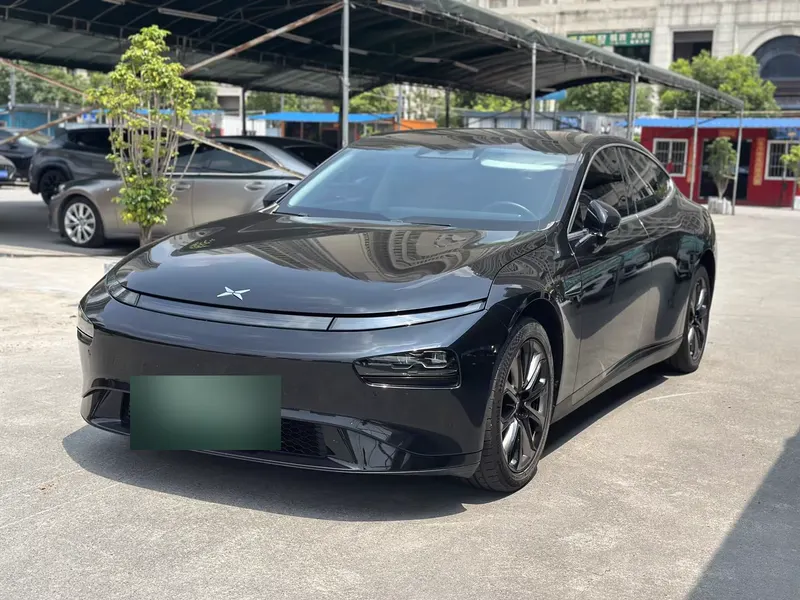
Electric vehicles on the ground in Foshan right now — each photographed on site, with its odometer reading and registration date on the page.


Ask which battery documents exist for a car
Send the vehicle reference or model and the destination country, and say which records matter to you: a scan report, a capacity test, or both. A colleague can ask the supplying dealer what is available; what arrives depends on the vehicle and the supplier.
We use what you send only to answer your inquiry, never for marketing. How we handle your details.